A destination wedding gives you the opportunity for
incredibly unique and beautiful photography. The natural backdrops different
destinations hold can be a huge factor in deciding where your destination
wedding will be. Whether you prefer to stand in front of beautiful nature or a
city scene, each destination wedding holds its own special meaning and
photography opportunity. Here are some of the best places for destination
weddings in the United States for photography backdrops.
Nov 11, 2014
Jul 18, 2014
Cast of Friday Night of Lights: Where Are They Now?
“Clear eyes, full hearts, never lose.” Who can ever forget
this line? And is there someone more inspiring than the best high school
football coach in a TV series, Coach Taylor? Yes, I’m talking about Friday Night Lights. The show
that has captivated audience’s hearts and made us want to visit Texas
and do the accent. After the show’s final episode aired in 2011, its fans are
still clamoring for an encore on the big screen. Unfortunately, nothing is in
the works (for now!) but since its viewers have become so attached with the
actors and the characters they portrayed, it’s interesting to know where they
are now.
Labels:
fnl,
friday night lights,
friday night lights cast,
movies,
texas,
texas football,
tv series,
tv shows
May 12, 2014
Offset vs. Digital Printing: When Offset is Your Best Option
In the Digital printing process, images are transferred to paper using a process of laser and toner.
In the Offset printing process, images are transferred from a plate to a rubber blanket and finally onto a sheet of paper where ink is applied via a series of rollers.
To decide which is right for your project keep these 3 questions in mind:
1. How big of a project is it?
2. How much time do we have?
3. What will best for our budget?
Advantage of Offset Printing:
• Printing in large quantities- Despite the initial set-up cost and time, Offset printing is a much more cost efficient process than Digital when printing larger runs, usually this is any project over 500 pieces.• Print on varying materials and papers- Digital printing is limited when it comes to the type of material it can be printed on, usually constricted to 18” X 12”. Offset printers however, can print on a much wider variety of sizes, thicknesses, and weights.
• Higher Quality- Offset printing offers a higher quality print than Digital. Often times with digital printing, colors will be close but not exact and because ink may not be fully absorbed, cracks and fading may appear around edges of images and text. Offset also offers a higher line frequency, compared to the usual 50-65 of digital, Offset printing used on magazines for example can he near 300.
• Exact Color Matching and Printing- Along the same lines as the previous point, digital has come a long way in recent years in terms of color quality, however since they cannot print Pantones like Offset printers can, the Colors will not be an exact match and can have slight differences over the course of a run.
Advantages of Digital Printing:
• Fast turnaround- Offset printing requires a longer setup time per project as well as longer drying time once the pieces have been printed, when time is a factor, Digital may be the way to go.• Variable Text Editing- Unlike Offset printing, with Digital individual pieces can be edited fairly quickly and easily, this works well for projects that have changing texts such as names, titles and/or addresses.
• Cost Effective for Small Projects- For short run jobs(under 500 pieces) digital printing is often times more cost effective than Offset because of its quick and low cost setup time.
How to choose:
As you can see, there will usually never be one service to choose for all projects. Offset is best used with larger projects, that have a longer time table and require a more precise and high quality color palate where Digital printing is best when time is a factor, your print run is smaller and the ability to edit during the process is of importance. The best practice is to keep in mind your timetable, size of project and Budget to help decide which process to choose from.Apr 14, 2014
How To Print Large Digital Photos
A great rule of thumb in determining how big you can blow up an image file is to use the standard print resolution of 300 dots per inch (dpi). If your camera is taking photos at 2400x3000 pixels, divide that by 300 and you'll realize you have an image that can accurately be reproduced to an 8x10 print. From about.com, here's a basic chart for smaller photos (which you can do the math to expand upon):
- 4x6 1200x1800 pixels 2 megapixels
- 5x7 1500x2100 pixels 3.1 megapixels
- 8x10 2400x3000 pixels 7.2 megapixels
So, obviously, the most important thing to consider is when taking your photos you need to have your camera settings adjusted to capture an image which can be printed at your desired size. There's no way to take an image that was shot with enough pixels for a wallet sized photo look good when blown up to a poster size.
Once you've decided on the image you want to enlarge, you basically have two options for printing. You can go to a commercial printer that does wide format printing and have them create your desired size for a commercial price or you can do it yourself. Now of course you're saying, "I don't have a printer that can spit out something that size!" Depending on your finished product, you don't need to. There are services online such as Block Posters that will chop up an image and give you downloadable PDF files that you can then print on your own printer and reassemble into one large image. Or, you can forgo any paid services and try this technique (http://www.cnet.com/how-to/print-your-own-giant-posters/) using the Rasterbator photo tool (Windows version available here - http://arje.net/rasterbator).
Jan 30, 2014
Should I Become a Professional Photographer?
Once upon a time, not too long ago, I said that I never
wanted to be a professional photographer, taking photos was just merely a hobby
of mine. While I still don’t consider myself a professional, I feel like I’m
taking a step in that direction and I don’t know how I feel about it.
Basically, my friend Allie and her husband George are on a
super strict budget for their upcoming wedding. In order to save money, they
initially decided to skip engagement photos and use the money for the actual
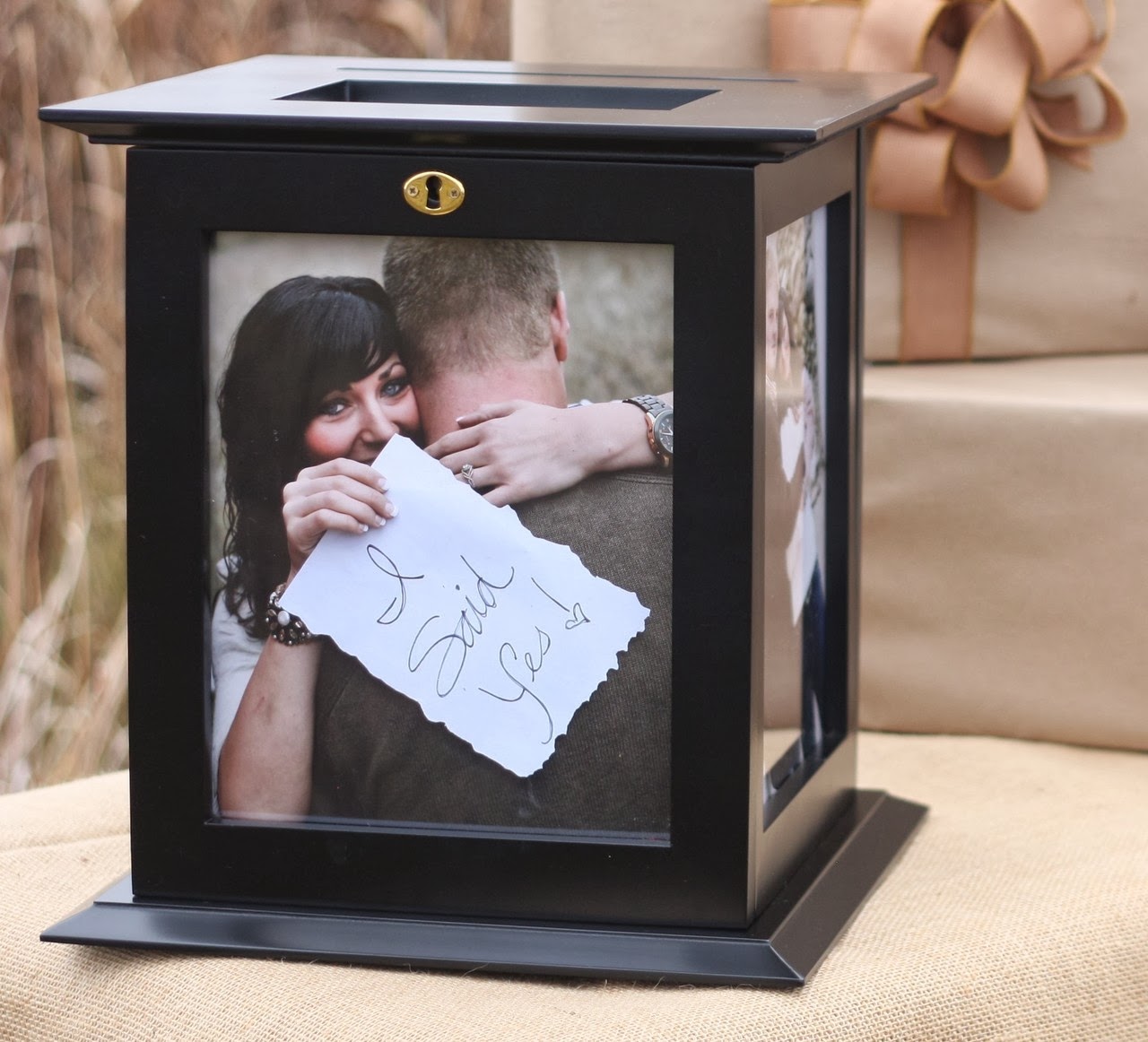
wedding photos. Then Allie found this adorable card box, which is pretty
amazing in my opinion! The outside of the card box displays photos so it also
doubles as a decoration for the reception hall. Since all of the wedding card
boxes on the website were shown with engagement photos, Allie decided that she
need a couple to put on display instead of printing off pictures of her and
George that were taken on an iPhone and probably in a bar, which I totally get.
The part I’m still trying to wrap my brain around is why she wanted ME to take a
few “engagement photos” for the card box.
Needless to say, I did it because that’s what good friends
do. I was extremely nervous about the session because I haven’t ever really
done an actual photo shoot with people. The majority of my experience consists
of nature photos and an obnoxious number of photos of my dog. After my jitters
went away and I started to feel comfortable, the photo shoot was amazing! Allie
and George were so much fun because they went along with all of my crazy ideas.
I’m really happy with how the photos turned out and can’t wait to see them in
the wedding card box next month.
As much as I loved helping out my friends, I don’t
necessarily want to be a professional photographer. Some of my other friends
who have seen the photos already have told me I am crazy for not trying to get
into the business though. And now I’m on the fence about what I should do! To
me it seems kind of crazy to make such a big career change, but I also know it
could end up being totally worth it. I’m going to have to put some serious
thought into this, even though I don’t have to make a decision right now and
could even change my mind down the road. What would you guys do?
May 16, 2013
Summer Photography Checklist
Photography has always been a passion of mine. I wouldn't ever want to be a professional photographer, but I do enjoy taking pictures in my spare time, especially in the summer. Living in the Northern states makes you appreciate the changing seasons which is very fun to document with a camera. I have captured a lot of photos of lovely flowers and gorgeous sunsets over the years, but I'm not a big outdoorsy person so unfortunately I'm missing a lot of beautiful scenery.
Since I'm kicking off summer with a trip to my friend's beautiful log cabin which is tucked away in the woods, I figured I should take advantage of the opportunity and get some of the nature shots I have been missing. My friend's cabin is on a river and not far from a public beach, but I haven't been there so I wanted to make a broad checklist for the summer instead of just the weekend. Hopefully I can cross them all off my list by the end of the summer.
Summer Photography Checklist
Since I'm kicking off summer with a trip to my friend's beautiful log cabin which is tucked away in the woods, I figured I should take advantage of the opportunity and get some of the nature shots I have been missing. My friend's cabin is on a river and not far from a public beach, but I haven't been there so I wanted to make a broad checklist for the summer instead of just the weekend. Hopefully I can cross them all off my list by the end of the summer.
Summer Photography Checklist
- Sunrise
- Moon and stars
- Frog on a lillie pad
- Turtles sunbathing on rocks
- Hummingbird and a flower
- A dog enjoying the sunshine
- Birds flying into the sunset
- Berries on the trees
- The view from the very top of the sand dunes
- A sandcastle
- A sailboat on the water
- A campfire
- Fireworks
- The clouds before a storm
- A rainbow
Related articles
Labels:
Nature,
Outdoor Photography,
Photography,
Summer,
Summer Photos
Apr 3, 2013
Lantern Festivals: Illuminated Inspiration
There are few things I enjoy more than a good festival.
Between the vast selection of one-of-a-kind displays, food vendors, upbeat
entertainment, and diversity of people, festivals provide photographers with
endless subjects and lively moments to capture on camera. Lately, I’ve been inspired
by images shot at various lantern festivals across that country.
If you’re unfamiliar with these spectacular events, they
were inspired by an age-old Lantern Festival held each year in China. The
original Chinese Lantern Festival is a festival celebrated on the 15th
day of the first month of the lunar calendar that marks the end of the Chinese
New Year Celebrations. Occurring on the first full moon night in the Chinese
lunar year, the festival symbolizes the awakening of Spring. People in China
traditionally celebrate with loved ones by appreciating the full moon, lighting
up lanterns, solving riddles on lanterns, setting off fireworks, and eating
rice glue balls.
The Lantern Festival originated from the Eastern Han Dynasty
when Buddhism was first being introduced to China. It is part of Buddhist tradition
for monks to light up lanterns in honor of Buddha on January 15th.
Therefore, Emperors of the Han Dynasty who wanted to promote the religion
ordered people to light up lanterns like the monks do in palaces and temples
across the region to demonstrate their respect for Buddha. Civilians were also
asked to string up lanterns on that night, giving birth to the Lantern
Festival. During the Song Dynasty, it was custom for people to write riddles on
paper strips and attach them to the lanterns for others to figure out. The subjects
of the riddles were traditionally songs, poems, or historical events. Fireworks
were added in the Qing Dynasty, making the festival a record-breaking grand
occasion.
Over the past 2,000 years, the Lantern Festival has grown to
include more customs and activities. The lanterns have become increasingly more
elaborate over the years. Many lanterns depict aspects of Chinese history and culture,
incorporating themes from Chinese legends and images that reflect traditional values.
Lanterns often represent animals from the Chinese zodiac and heroic figures. Some
lantern designs are purely aesthetic rather than symbolic, and the diversity of
lanterns is astounding. The popularity and aesthetic delight of the Lantern
Festival in China has sparked countless other lantern festivals around the
world, including the United States.
One of the well-known lantern festivals in the States that I’ve
been inspired by pictures from is the Holiday Lantern Festival at the Global
Winter Wonderland inside the Great America Theme Park in Freemont, California
held from November through January each year. The festival boasted eco-friendly
lantern recreations of some of the world’s most beloved architectural
achievements including the State of Liberty, the UK London Bridge, and Egyptian
Pyramid. Some of this past year's displays were 100 feet wide, towering into the air more
than 50 feet high. Festival goers also enjoyed captivating entertainment
including martial art performances, acrobats, and laser lights shows,
sight-seeing attractions at the Global Village, and classic holiday characters like
Santa Claus and Rudolph.
Another worthwhile event with fascinating photographs is the
Chinese Lantern Festival at the State Fair of Texas in Dallas. This
unconventional festival held from November through January featured 22 hypnotizing lantern
displays in and around the fairground lagoon including The Temple of Heaven,
Statue of Liberty, animated creatures, and a large Blossoming Lotus. Other visual delights included a collection of architecture,
fabric flora and fauna including flamingos, dinosaurs, pandas, and even a
dragon made from 15,000 porcelain dishes! Visitors had the pleasure of browsing
Old World handcrafts, watching artists weave palm leaves into detailed animals,
paint with liquid sugar, and create creature confections. Not to even mention
the spread of delicious Chinese and Western food!
Last month, visitors enjoyed all the buzz of a
Chinese village around the Lunar New Year at the annual Chinese American Museum Lantern Festival in Los Angeles. Held at the Chinese American Museum,
the festival featured historic New Year celebrations with everything from musical
performances to vibrant lantern displays. The festival offered an assortment of
unique attractions including a glow-in-the-dark show, acrobats and lion dancers,
and hands on crafts like origami, kite-building, and lantern-making.
Looking for an opportunity to take your own lantern festival
photos? Mark your calendar for the 2013 San Diego Lantern Festival taking place on July 19-21 in the Little Saigon San Diego Commercial and Cultural District.
The festival typically draws between 10,000-15,000 visitors- bringing together
businesses, neighbors, students and community groups. The festival features a fantastic
array of cultural activities to be submersed in. From delicious food, street
performers, eccentric vendors, and carnival rides, there’s something for all
ages to enjoy. At night, you can look forward to a display of more than 6,000
lanterns lighting up the sky. Don't forget your camera!
Martha Fox a guest contributor from Carolina Lanterns, a South Carolina based lighting company specializing in custom-made gas and electric lanterns.
Labels:
Chinese Culture,
Cultural Events,
Lantern,
Lantern Festival,
Photography
Subscribe to:
Posts (Atom)
.jpg)